
verifiedUpdated March 2026 · Expert Tested

Best Watercolor Brushes for Beginners 2026

Starting watercolor painting should be exciting, not overwhelming. We tested dozens of beginner-friendly brushes for ease of use, forgiveness, and price to find the five that help new painters build confidence fastest.

By Best Watercolor Brushes Editorial Team · Last Updated March 2026

updateLast Updated: March 26, 2026verifiedTested by: BWB Editorial Teambrush5 brushes testedschedule12 min read
emoji_events

Quick Verdict

The Princeton Heritage 4050 Round is our top pick for beginners. Its synthetic kolinsky fibers are forgiving, hold a fine point, and cost a fraction of natural sable. Pair a size 8 with a size 4 and you have everything you need to start painting with real confidence.

Our Top Beginner Picks at a Glance

Best Overall
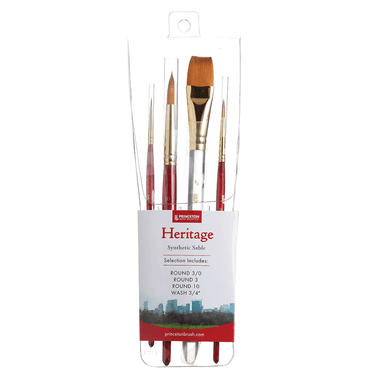
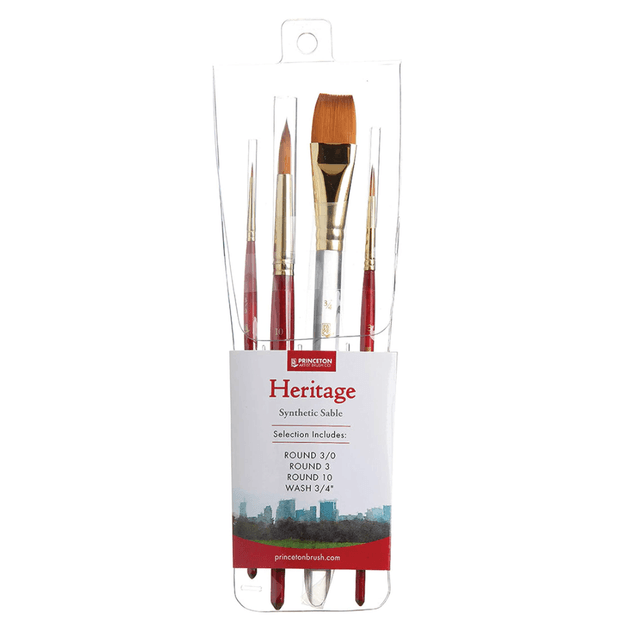
Princeton Heritage 4050 Round

Princeton Heritage 4050 Round

star9.3/10

Synthetic Kolinsky

$12–20

Check Price on Amazon
Best Budget
Princeton Neptune Round

Princeton Neptune Round

star8.7/10

Synthetic Squirrel

$8–15

Check Price on Amazon
Best Premium Beginner
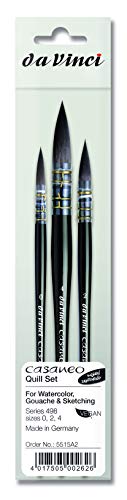
Da Vinci Casaneo

Da Vinci Casaneo

star9/10

Synthetic Squirrel

$15–28

Check Price on Amazon

Beginner Brush Comparison

BrushHair TypePriceRatingBest For
Princeton Heritage 4050Synthetic Kolinsky$12–209.3Best overall beginner brush
Princeton NeptuneSynthetic Squirrel$8–158.7Best budget option
Da Vinci CasaneoSynthetic Squirrel$15–289.0Best premium beginner
Winsor & Newton CotmanSynthetic Mix$5–128.4Best starter set
Royal Talens Van GoghSynthetic$6–128.2Best value

In-Depth Beginner Brush Reviews

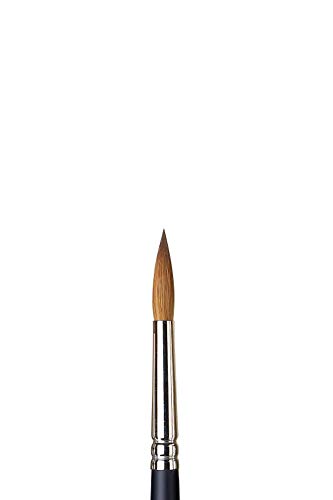
Princeton Heritage 4050 Round
9.3/10
#1

Princeton Heritage 4050 Round

Hair TypeSynthetic Kolinsky Sable
ShapeRound
Sizes0–12
HandleShort, birchwood
Price Range$12–20
Made InUSA
Pros
  • checkVery forgiving for new painters
  • checkExcellent snap helps maintain control
  • checkAffordable enough to buy multiple sizes
Cons
  • closeSlightly less water capacity than natural hair
  • closeHandle lacquer can chip with heavy use

Our Take

The Princeton Heritage 4050 is the brush we hand to every beginner who walks through our studio. Its synthetic kolinsky fibers deliver reliable spring and quality that forgives the clumsy strokes every new painter makes. You get real performance at a price that lets you buy a full size range without guilt. If you only buy one brush to start, make it a Heritage 4050 Round in size 8.
Check Price on Amazonarrow_forward
Princeton Neptune Round
8.7/10
#2

Princeton Neptune Round

Hair TypeSynthetic Squirrel
ShapeRound
Sizes0–12
HandleShort, aqua lacquered
Price Range$8–15
Made InUSA
Pros
  • checkStrong price-to-quality ratio
  • checkSoft tip makes blending effortless
  • checkHolds generous amounts of water
  • checkWide size range to grow into
  • checkVery affordable for a full set of sizes
Cons
  • closeLess snap than kolinsky-style brushes

Our Take

When budget matters, the Neptune is the brush to reach for. Its soft synthetic squirrel fibers load up with water well and release color in smooth, even washes that make beginners look more skilled than they are. The lack of stiff snap is actually an advantage for newcomers since it encourages a lighter touch. At under $15 for most sizes, it is a hard-to-beat entry point.

Check Price on Amazonarrow_forward
Da Vinci Casaneo
9/10
#3

Da Vinci Casaneo

Hair TypeSynthetic Squirrel (Casaneo fiber)
ShapeRound
Sizes1–10
HandleShort, black lacquered
Price Range$15–28
Made InGermany
Pros
  • checkPremium feel at a mid-range price
  • checkSolid water capacity for learning washes
  • checkGerman manufacturing quality
Cons
  • closePricier than budget options for a first brush
  • closeFewer size options than competitors
  • closeLow snap can feel unfamiliar if you expect more spring

Our Take

The Casaneo is the beginner brush for those who want to invest a little more upfront and get a tool that will grow with them. Its proprietary fiber mimics natural squirrel hair with very good accuracy, giving you smooth and even wash application from day one. Beginners who gravitate toward loose, wet-on-wet styles will find this brush worth the investment. Think of it as a long-term first purchase.

Check Price on Amazonarrow_forward
Winsor & Newton Cotman
8.4/10
#4

Winsor & Newton Cotman

Hair TypeSynthetic Mix
ShapeRound (also sets with multiple shapes)
Sizes1–12
HandleShort, red lacquered
Price Range$5–12
Made InUK
Pros
  • checkVery affordable individual brushes
  • checkStarter sets include multiple shapes
  • checkWidely available at art supply stores
Cons
  • closeLess refined feel than Heritage or Neptune
  • closeSmaller belly holds less water

Our Take

Cotman is not the most refined brush on this list, but that is not the point. Winsor & Newton engineered these synthetics to be workhorses that can take a beating while still performing respectably. They are the brushes you learn on without worrying about ruining something expensive. The starter sets are especially smart since they introduce you to multiple shapes at a very low total cost.

Check Price on Amazonarrow_forward
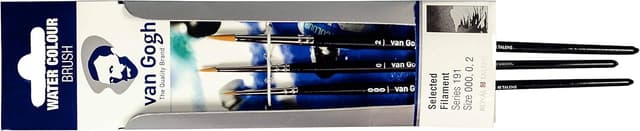
Royal Talens Van Gogh
8.2/10
#5

Royal Talens Van Gogh

Hair TypeSynthetic
ShapeRound
Sizes0–10
HandleShort, blue lacquered
Price Range$6–12
Made InNetherlands
Pros
  • checkExcellent value for the price
  • checkBalanced spring and softness
  • checkConsistent quality batch to batch
  • checkPart of a well-known student supply line
Cons
  • closeNot as widely available as some competitors
  • closeLess water capacity than Neptune

Our Take

Royal Talens designed the Van Gogh line specifically for students, and the balanced feel shows. If you want a cohesive student-grade setup from a single brand at a low total cost, this is a smart path.

Check Price on Amazonarrow_forward

Beginner's Brush Buying Guide

Not sure what to look for in your first watercolor brushes? Here are the key factors that matter most for beginners.

eco

Start with Synthetics

Natural hair brushes like kolinsky sable offer top-tier performance, but they are expensive and require careful maintenance. For beginners, modern synthetic brushes deliver 90% of the performance at a fraction of the cost. They are also more durable, easier to clean, and completely cruelty-free. Start synthetic, and you can always explore natural hair later once you know your preferences.

brush

The Round Is Your Best Friend

If you could only own one brush shape for watercolor, it should be a round. Rounds can do almost everything: thin lines on the tip, wide strokes on the belly, and decent washes with larger sizes. Many professional watercolorists use rounds for 80% or more of their painting. Master the round first, then branch out into flats, mops, and riggers as your style develops.

straighten

Size Matters

New painters often buy brushes that are too small. A size 8 or 10 round should be your workhorse brush for general painting. It holds enough water for smooth strokes and can still produce fine lines when used on the tip. Add a smaller round (size 2 or 4) for details and a larger one (size 12) for washes. Three sizes cover virtually every situation a beginner will encounter.

payments

Spend Wisely, Not Lavishly

You do not need to spend a fortune to get good brushes. A set of 3 to 5 quality synthetics in the $25 to $50 range is the sweet spot for beginners. Avoid the temptation to buy very cheap craft store brushes that lack proper point and spring. Equally, there is no reason to invest in premium kolinsky sable until you have enough experience to appreciate and care for them properly.

Related Articles

groups

BWB Editorial Team

Watercolor Brush Reviewers

The Best Watercolor Brushes editorial team has collectively tested over 200 watercolor brushes across 1,000+ painting sessions. Our reviews combine hands-on studio testing with feedback from professional watercolor artists, art educators, and passionate hobbyists. Every brush is evaluated using our standardized 5-criteria scoring system before it earns a recommendation.

  • Tested 200+ watercolor brushes hands-on
  • Standardized 5-criteria scoring system
  • Feedback from professional watercolor artists
  • Regular brush longevity re-testing

Beginner Brush FAQs

What brush should a complete beginner start with?expand_more
Start with a single round brush in size 8 or 10. The round is the most versatile watercolor brush shape, capable of both broad washes and fine detail lines. The Princeton Heritage 4050 in size 8 is our top recommendation for a first brush — it is forgiving, affordable, and performs well above its price point.
How many brushes does a beginner need?expand_more
Three brushes are enough to get started: a large round (size 10–12) for washes, a medium round (size 6–8) for general painting, and a small round (size 2–4) for details. You can always add specialty shapes like flats and mops later as your technique develops.
Should beginners buy natural or synthetic brushes?expand_more
Synthetic brushes are the best choice for beginners. They are more affordable, more durable, easier to clean, and cruelty-free. Modern synthetics like the Princeton Heritage and Neptune lines score very well on spring and point quality. Save natural brushes for later when you have developed your technique and can appreciate the subtle differences.
How much should a beginner spend on brushes?expand_more
Plan to spend between $20 and $50 on your initial brush set. This gets you 3–5 quality synthetic brushes that will last through your learning phase. Avoid very cheap craft brushes under $3 — they lack the point and spring needed for watercolor — but you also do not need to spend $50 on a single brush when starting out.
Do expensive brushes make a difference for beginners?expand_more
At the beginner level, the difference between a $12 synthetic and a $60 kolinsky sable is minimal in terms of your painting results. Technique matters far more than tools when you are learning. Invest in affordable quality brushes now, and upgrade as your skills grow and you can feel the difference between fiber types.